


As the logistics sector faces growing pressure to reduce emissions, manage energy costs and ensure operational resilience, energy innovation is becoming a strategic priority. In a series of interviews taken at Logiconomi 2025, we talk with executive leaders from EODev and Toyota Material Handling Europe about how new technologies are reshaping energy use in logistics, from electrification and battery systems to hydrogen power and smart energy management.
Electrification and energy efficiency
Electrification and energy efficiency are transforming logistics into a more sustainable and cost-effective sector. The transition toward electric alternatives is accelerating due to environmental regulations, technological advancements and corporate sustainability goals.
Per Fyrenius, SVP Corporate Development at Toyota Material Handling Europe, highlights the ongoing shift toward electrification: “In intralogistics, we are well electrified already, but road transport still has a lot of potential. We’re seeing a fast shift from old lead-acid batteries to modern lithium battery technologies, and more steps are coming.”
Per emphasises that energy efficiency is being built into every layer of handling equipment design: “Forklift trucks continue to be made more energy efficient using all sorts of solutions. We’re also looking at orchestrated charging, not just for forklifts, but eventually for electric lorries docking at warehouses.” With this, there’s a growing need for connected systems. “The entire ecosystem will need to be connected and optimised,” as Per points out, “where charging, power supply and equipment all work together.”
This vision of a fully integrated energy infrastructure reflects a broader trend in logistics: the move from isolated improvements to system-wide optimisation. As more and more electric handling equipment and vehicles enter the supply chain, the need for intelligent energy orchestration becomes critical, not just to reduce costs, but to ensure operational continuity.
Smart systems and zero-emission power
Stéphane Jardin, Deputy CEO at EODev, brings a complementary perspective, focusing on the role of data and zero-emission energy systems. “It starts with data availability,” he explains, “Smarter devices produce data we can analyse to optimise our energy use. But there’s a limit to how much we can reduce consumption as demand keeps rising.”
To bridge the gap, EODev provides resilient, zero-emission power solutions. Stéphane continues: “We offer hydrogen systems and battery energy storage systems that can step in when there’s a power outage or supply is insufficient. These systems are not only highly efficient but also emission-free.”
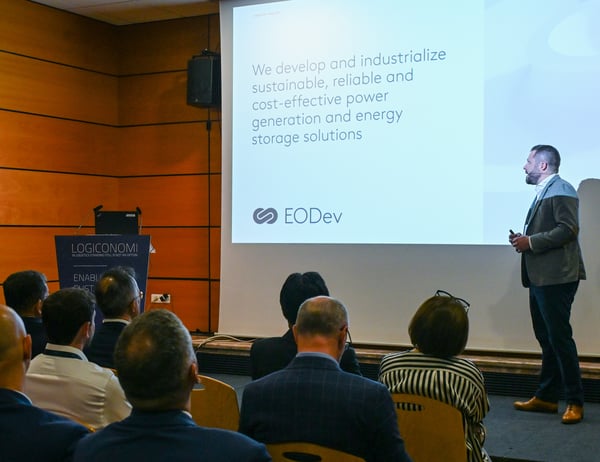
Stéphane emphasises that these technologies are not just about sustainability; they’re about resilience and business continuity. “They contribute to resilience first, but also to business growth,” he adds, “If you don’t have enough power, you need express systems that can take over immediately.”
This dual focus on efficiency and resilience is becoming increasingly important as logistics operations face more frequent disruptions, from energy shortages to extreme weather events.
Customer expectations and the pressure to deliver
Customer expectations are increasingly shaping the future of energy innovation, transforming how energy is produced, delivered and consumed. Consumers are no longer passive. They are more environmentally conscious than ever and desire stability, control and transparency in terms of energy usage and costs.
“Our customers are under pressure to manage energy costs and ensure energy security,” Per agrees, “and they’re feeling the same pressure from their customers. Consumers like you and me, who expect logistics providers to offer clean, renewable options.”
This knock-on effect of expectations—from end consumers to logistics providers to equipment manufacturers—is accelerating the shift toward smarter, more sustainable energy solutions. Stéphane adds that transparency and accountability are key. “Customer expectations start with reporting,” he says, “We need to show evidence of improvements, not just in energy efficiency, but also in CO₂ savings and carbon intensity.”
He also notes the challenge of integrating new technologies into existing operations: “It requires a strong understanding of the operational and financial impact, and strong support from suppliers to make these technologies viable.”
As energy becomes a more strategic concern, logistics companies are expected not only to innovate but to prove the impact of their innovations, through data, reporting and measurable outcomes.
Enabling sustainable performance
Logiconomi is a communication platform, created by Toyota Material Handling Europe, to identify and understand challenges, trends and emerging technologies in the logistics industry. The aim is to support all players active in the logistics industry with insights and inspiration for improved logistics operations.
Discover more trends as we uncover more interviews in this blog series or in our latest trend report.